Fagaceae

Quercus petraea 'Mespilifolia' Quercus petraea 'Mespilifolia'

One of the best known winter oak cultivars. The crown is broad and loose and the branches droop somewhat. Only old trees develop shallow grooves in the bark. Young twigs are greenish-brown. The leaves… Read more

Important properties
Height: 16 - 20 m
Crown: round, half-open crown
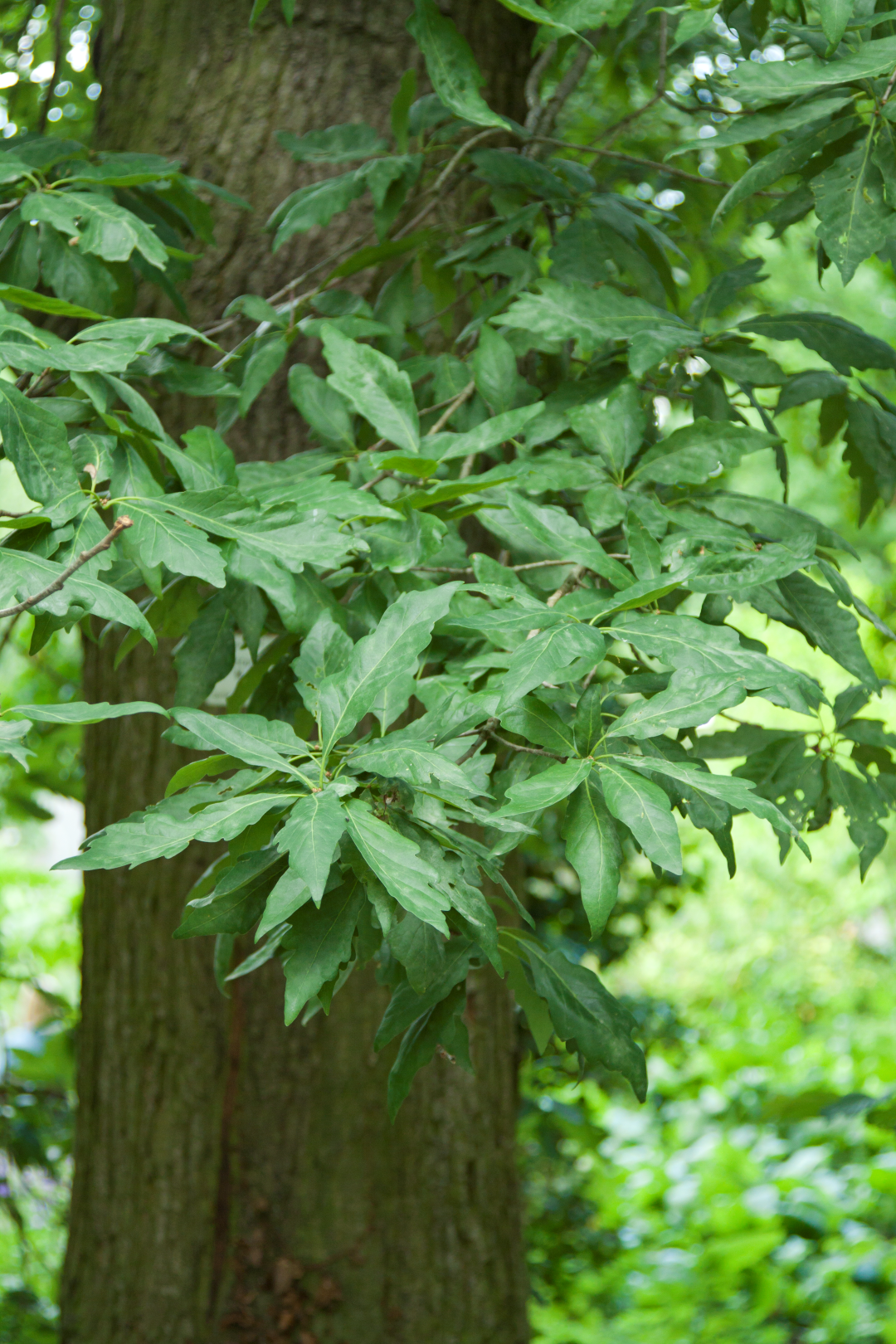
Leaf: narrow lanceolate, unlobed, green, 8 - 18 cm
Flowers: yellowish-brown ? catkins, 5 - 8 cm long, May
Clear stem tree Multi-stem tree calcareous soil loamy soil sandy soil tolerates no paving resistant to de-icing salt resistant to frost (WH 1 - 6) suitable for dry soil can withstand wind 1st size , taller than 12 metres half-open crown green yellow average growing non-toxic (usually)

This product is currently not available.
You can submit your request via the contact form, we will inform you without obligation about the possibilities.

Quercus-petraea-mespilifolia

Quercus petraea 'Mespilifolia'

One of the best known winter oak cultivars. The crown is broad and loose and the branches droop somewhat. Only old trees develop shallow grooves in the bark. Young twigs are greenish-brown. The leaves emerge 2 weeks later than those of Q. robur; they are yellowish-green, narrow lanceolate to narrow elongated. A remarkable difference with the species is that the tough leathery leaves are unlobed, especially the first growth in spring. The leaves that emerge second show more resemblance to those of the species. The leaf edge is smooth and slightly undulating. The ovoid stalkless acorns are grouped together and are one-third to one-quarter enclosed in the cupule; the latter is covered with small contiguous scales. The tree also grows in dry soil provided that it is not too poor.
Specifications
Height:
16 - 20 m
Crown:
round, half-open crown
Bark and branches:
greyish-brown, remains smooth for a long time
Leaf:
narrow lanceolate, unlobed, green, 8 - 18 cm
Flowers:
yellowish-brown ? catkins, 5 - 8 cm long, May
Fruits:
ovoid acorns, 2 - 2.5 cm, in groups of several together
Spines/thorns
None
Toxicity:
usually not toxic to people, (large) pets and livestock
Soil type:
nutritious, can take dry conditions
Leaf:
narrow lanceolate, unlobed, green, 8 - 18 cm
Soil moisture:
suitable for dry soil
Paving:
tolerates no paving
Winter hardiness zone:
5a (-28,8 to -26,1 °C)
Wind resistance:
good
Other resistances:
resistant to frost (WH 1 - 6), can withstand wind, resistant to de-icing salt
Application:
avenues and broad streets, parks, cemeteries, industrial areas, large gardens
Shape:
clearstem tree, multi-stem treem
Origin:
France, 1843