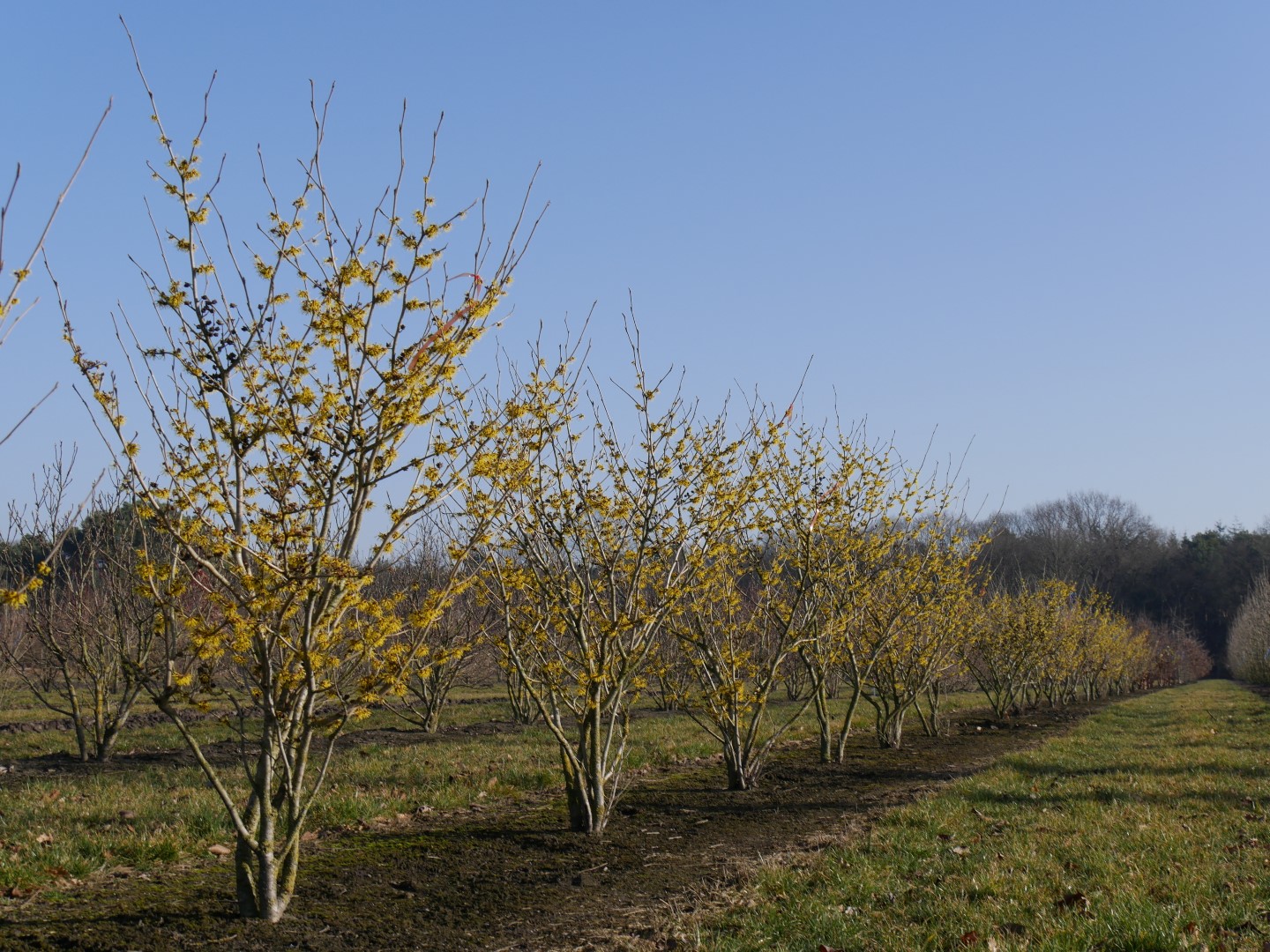
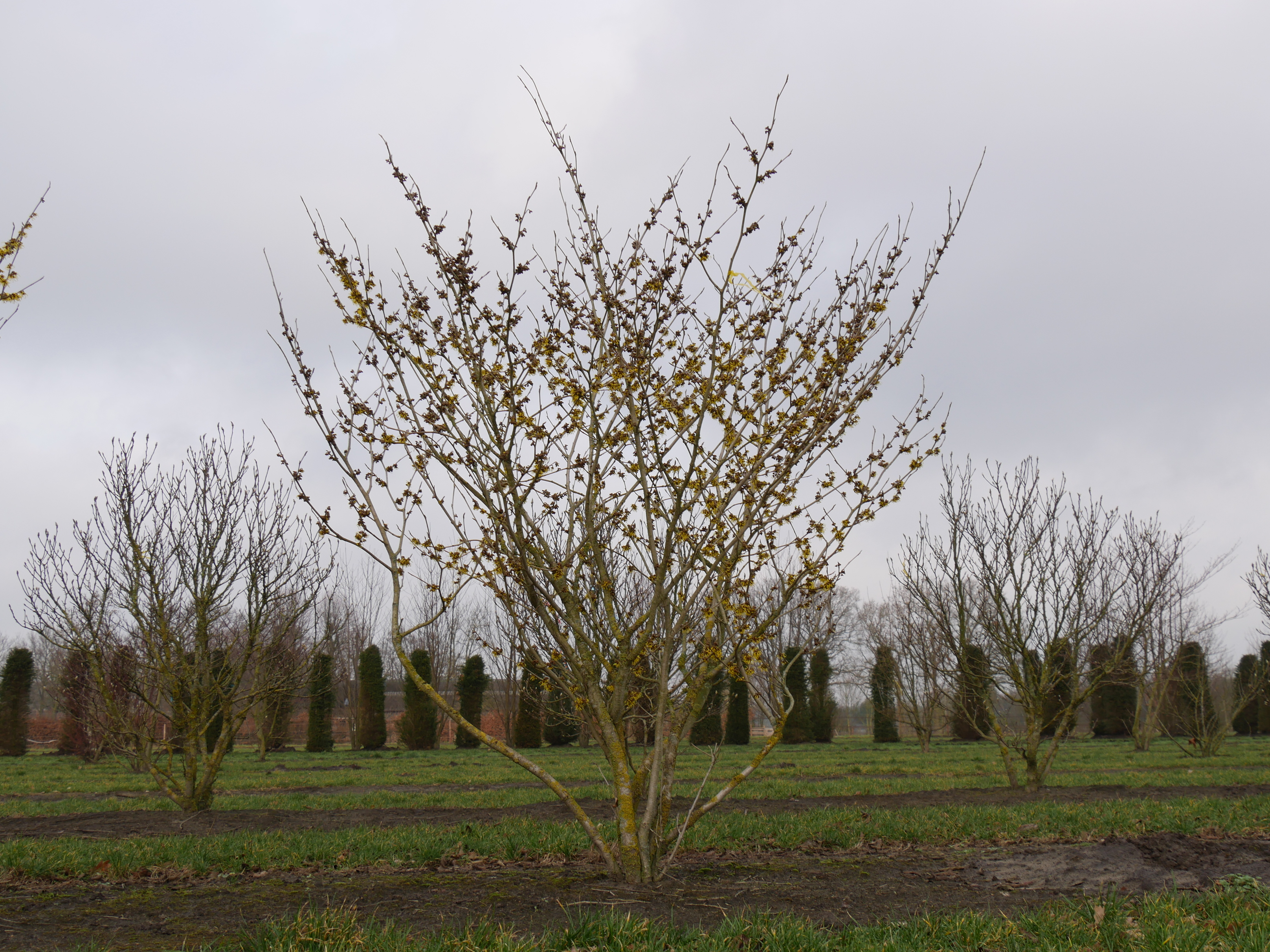
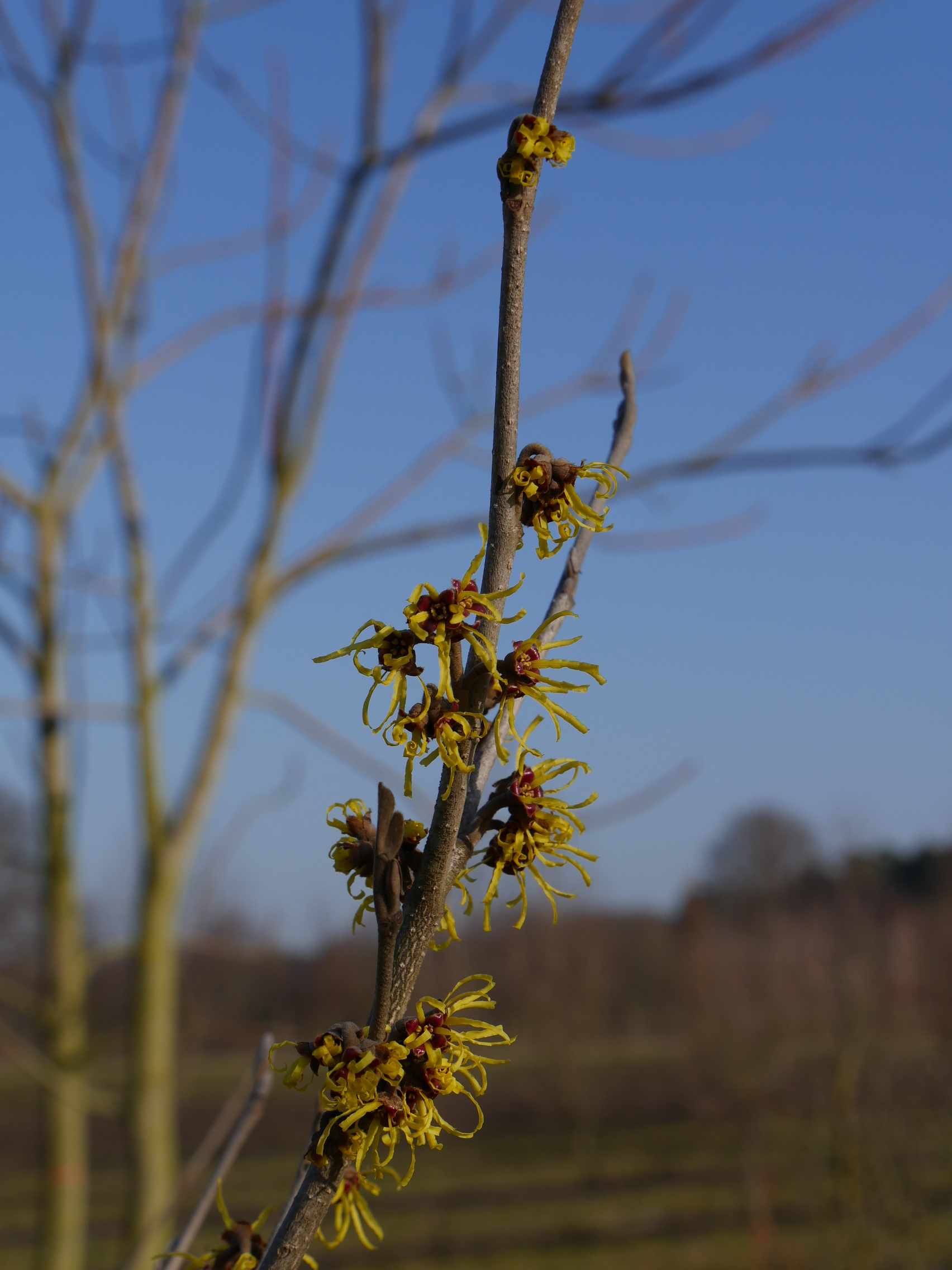
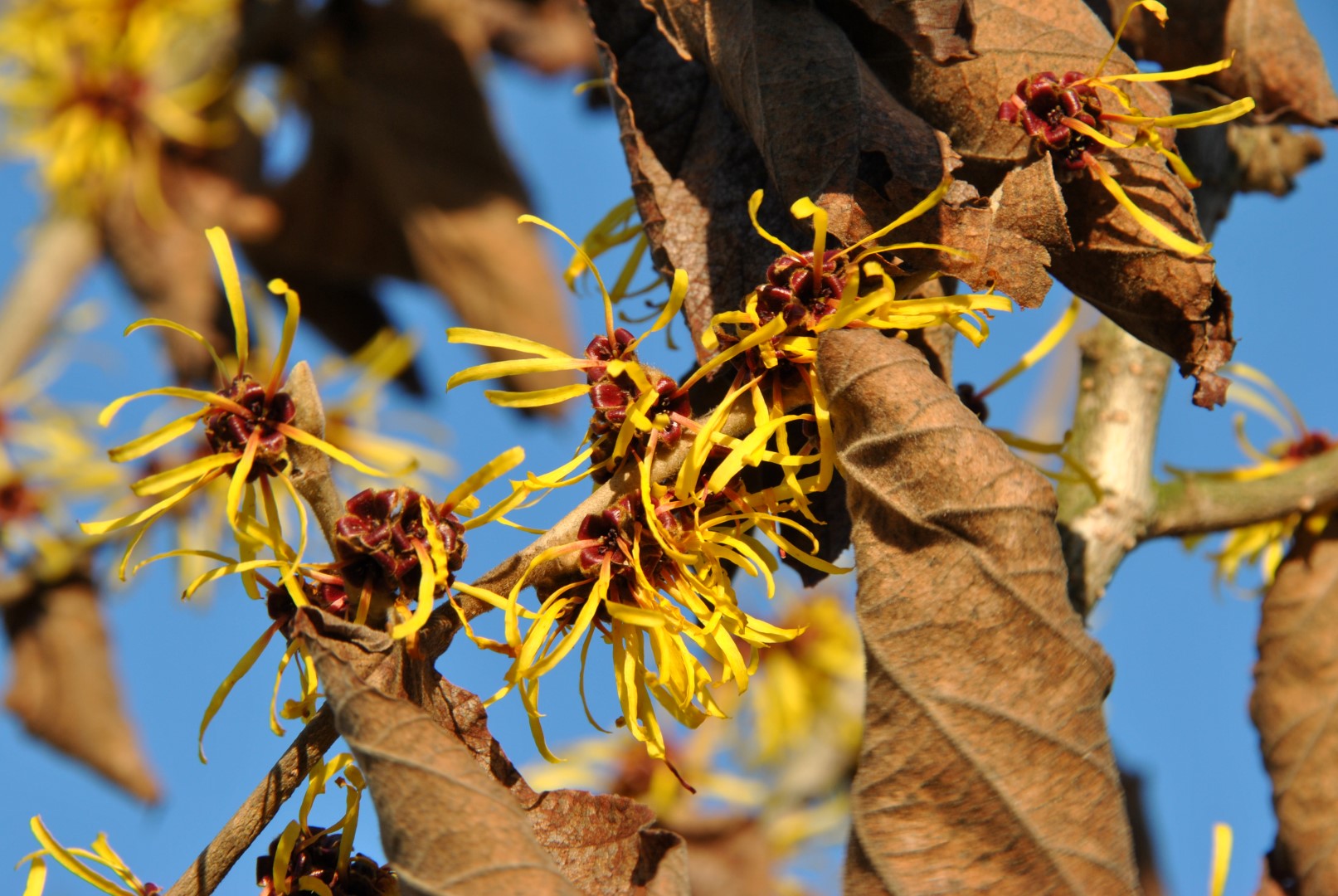
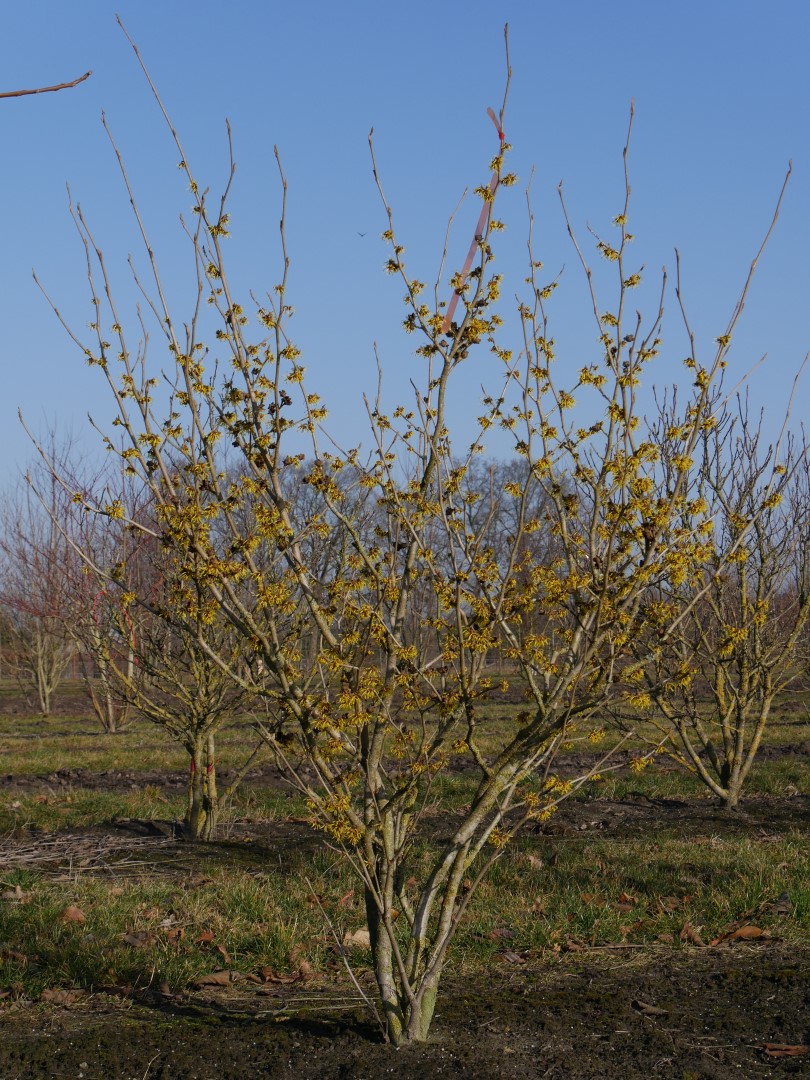
Nicely branching, sturdy shrub to small tree about 3.5 m high and 2.5 m broad, with vase-shaped, dense crown. Grows easily and naturally forms an attractive, regular crown. The slightly glossy dark green leaf turns yellow in autumn. Blossoms around February/early March, making it one of the latest blossoming cultivars. The light yellow flowers, measuring over 3 cm, have hardly any fragrance. ‘Westerstede’ may not be the most beautiful Hamamelis for its flowers, but it is certainly a very healthy, cultivar with good growth. The late blossoming is also a good attribute.
usually not toxic to people, (large) pets and livestock
Soil type
loamy soil, sandy soil, peaty soil, acid soil
Paving
tolerates no paving
Winter hardiness zone
6b (-20,5 to -17,8 °C)
Wind resistance
moderate
Other resistances
resistant to frost (WH 1 - 6)
Application
tree containers, small gardens, patio gardens
Shape
clearstem tree, multi-stem treem
Clear stem treeMulti-stem treeacid soilloamy soilpeaty soilsandy soiltolerates no pavingresistant to frost (WH 1 - 6)vase-shaped3rd size, smaller than 6 metresdense crowngreenyellowFebruaryaverage growingConspicuous bloomAttractive autumn colournon-toxic (usually)Capricious growing
Frequently asked questions
Hamamelis ×intermedia 'Westerstede'
Hamamelis ×intermedia 'Westerstede' can eventually reach a height of 4-5 m, depending on the site and climate conditions.
Hamamelis ×intermedia 'Westerstede' is average growing and can eventually reach a height of 4-5 m, depending on the site and climate conditions.
The leaves of Hamamelis ×intermedia 'Westerstede' turn yellow in autumn.
The right time to plant Hamamelis ×intermedia 'Westerstede' is during the dormancy period. In Western Europe, Hamamelis ×intermedia 'Westerstede' with root balls can generally be planted from mid-November to late April, although this depends strongly on the climatic conditions and the species of tree.
Hamamelis ×intermedia 'Westerstede' blooms in february.