
 English
 English (United Kingdom)
 Nederlands
 Nederlands (België)
 Deutsch
 français
 čeština
 polski
 español
 română
 dansk
dansk
 svenska
 magyar
 Türkçe
 slovenčina
 русский
 norsk
norsk
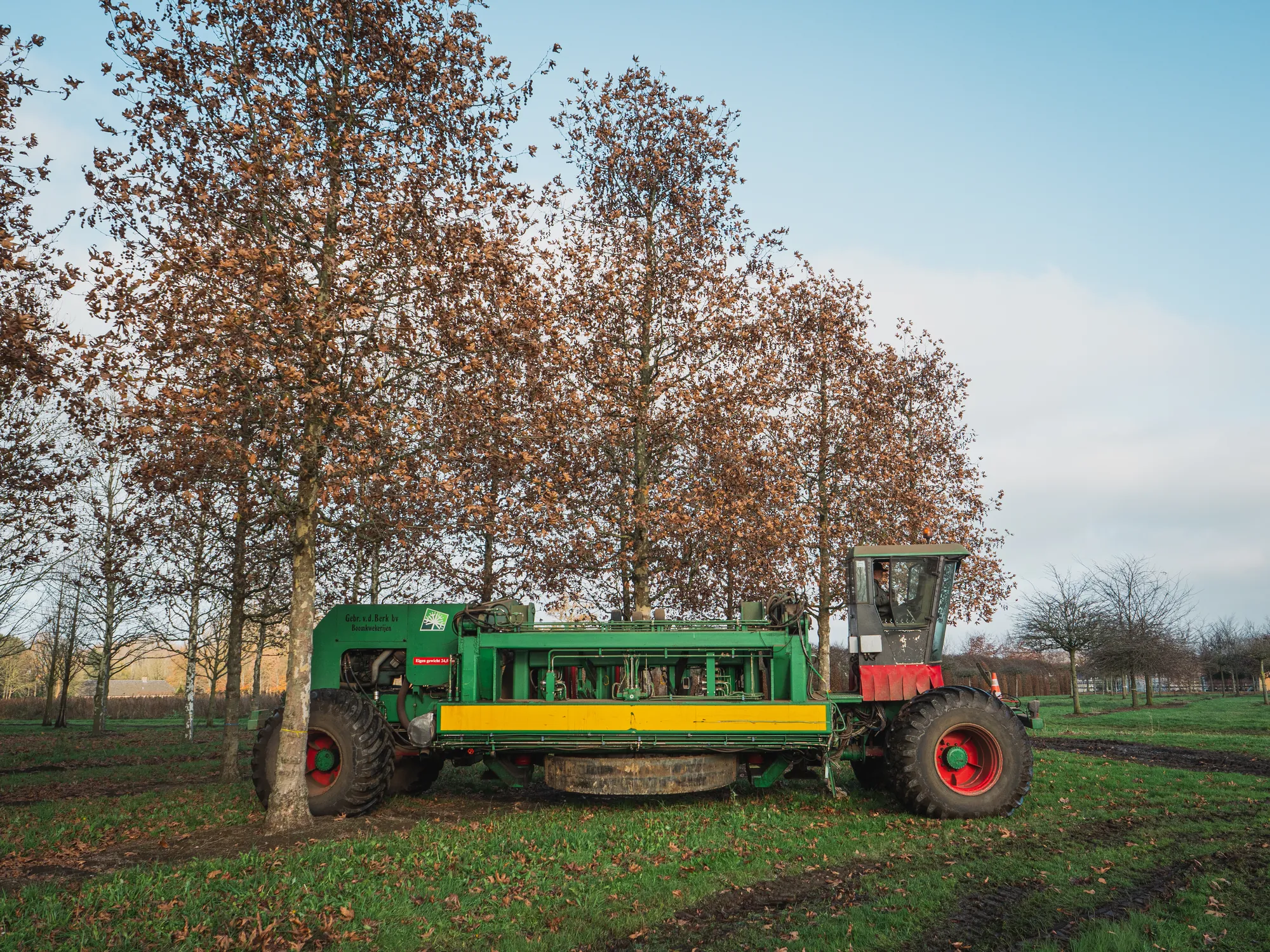
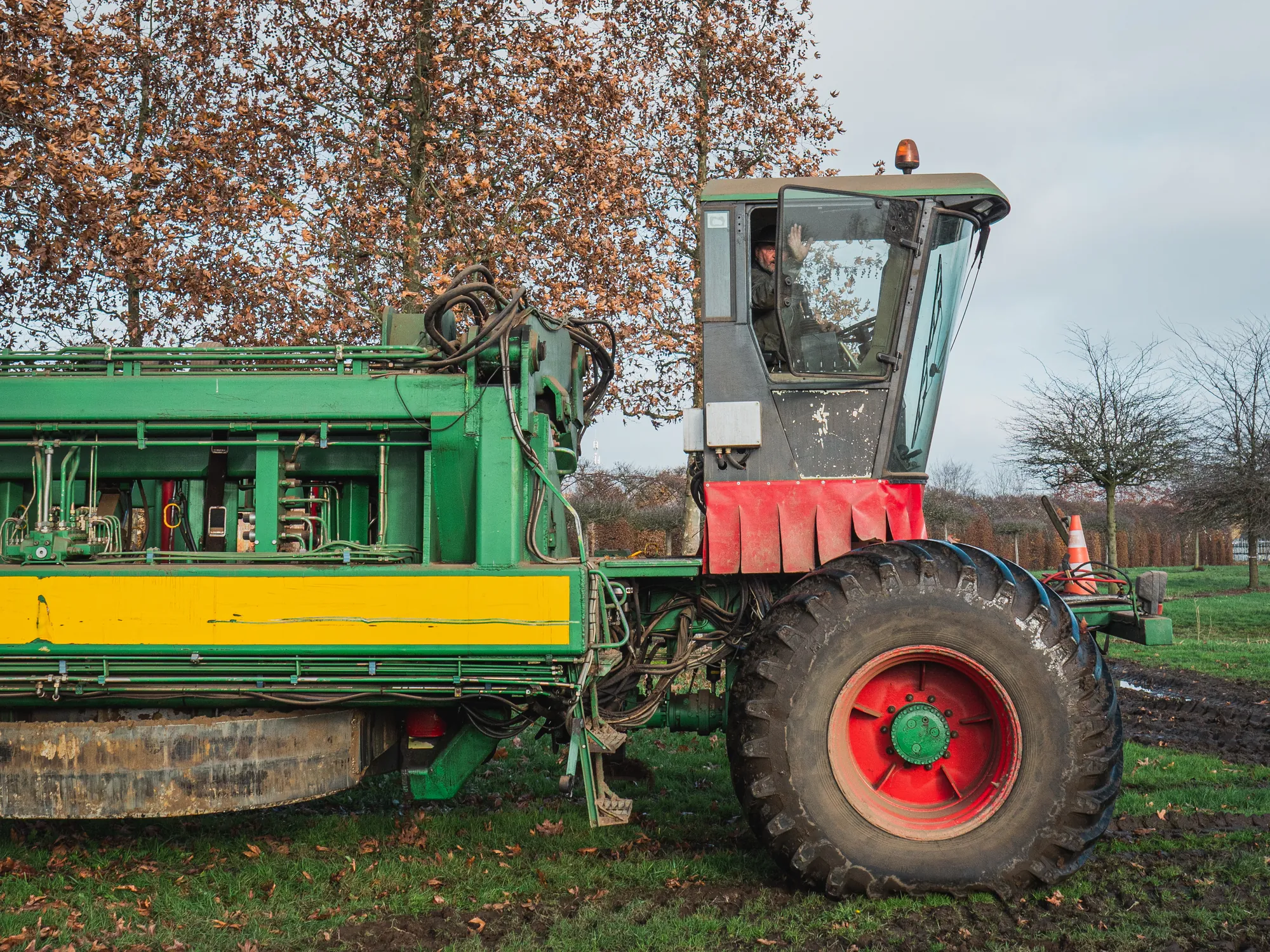
Drawn on the shop floor
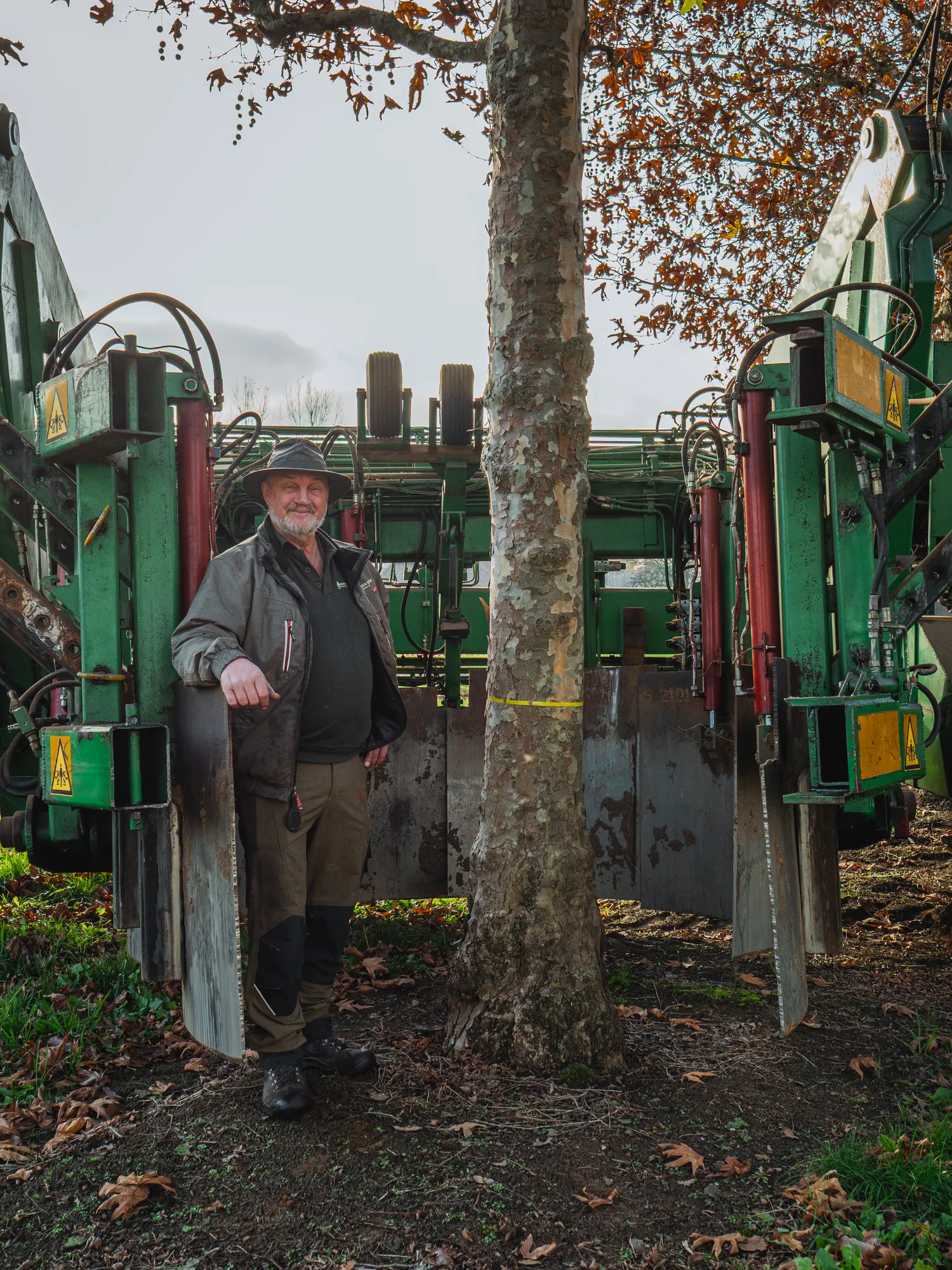
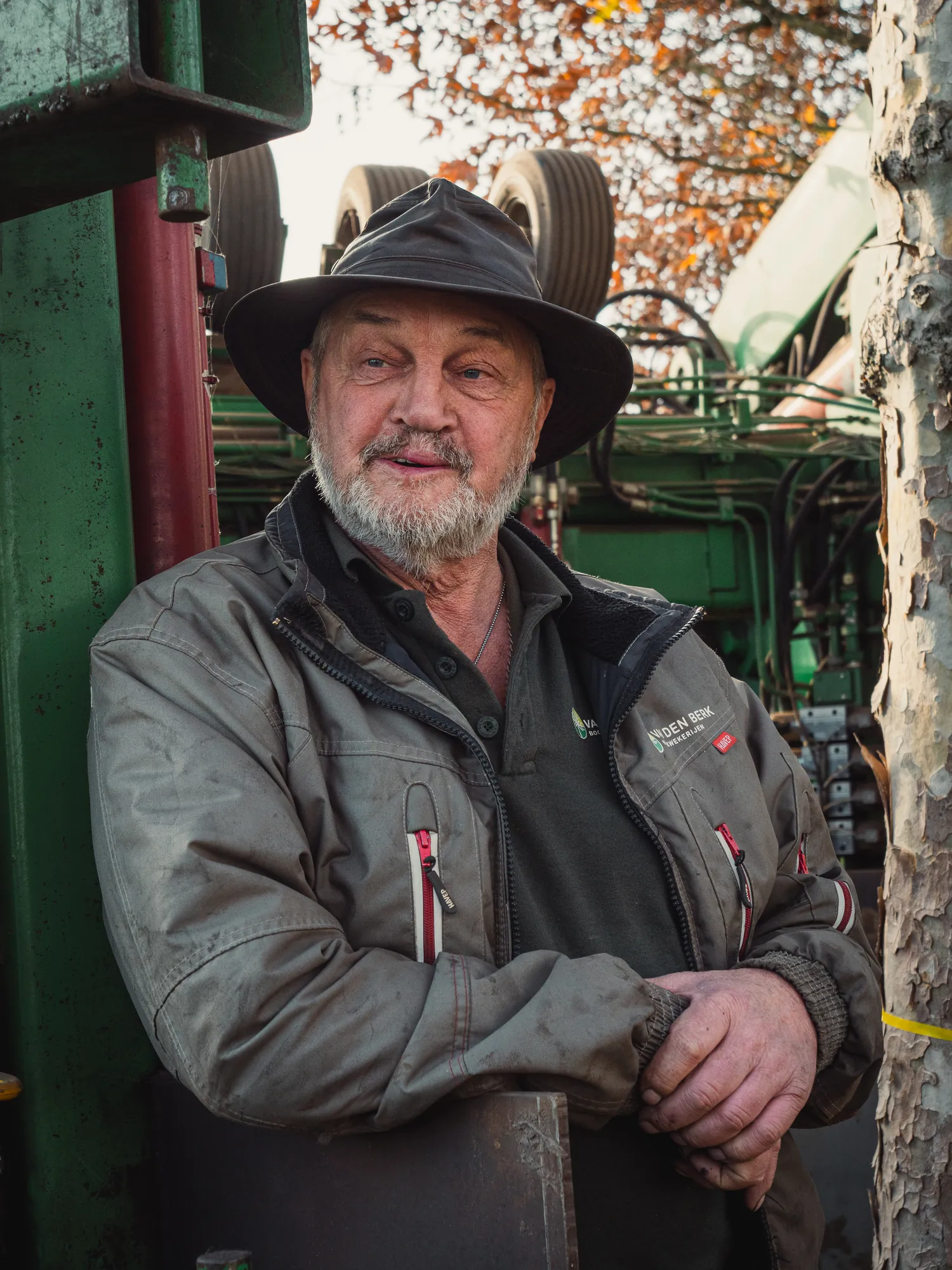
The RJT, named after its builders Riny, Jos, and Toon, isn't a machine you simply order from a catalogue. It came out of necessity. The existing tree spades could no longer handle the ever-larger trees. Lifting heavy trees with cables and wooden rigs was labor-intensive and risked damaging the trees. A better solution was needed. Where others might have brought in an engineering firm, Jos and his colleagues started with a piece of chalk on the shop floor. "We just drew a little ring on the ground. Smallest size, largest size... and that's how the RJT project began." That approach may be what defines Jos best: not endless talk about possibilities, just getting started.
A 24-ton puzzle in steel
After more than 3,000 hours of building, the result was an impressive 24-ton machine, purpose-built for lifting and moving the heaviest trees on the nursery. The machine could lift root balls up to 2.50 meters in diameter and offered five different spade sizes. This made it possible to lift trees far more efficiently and safely than before.
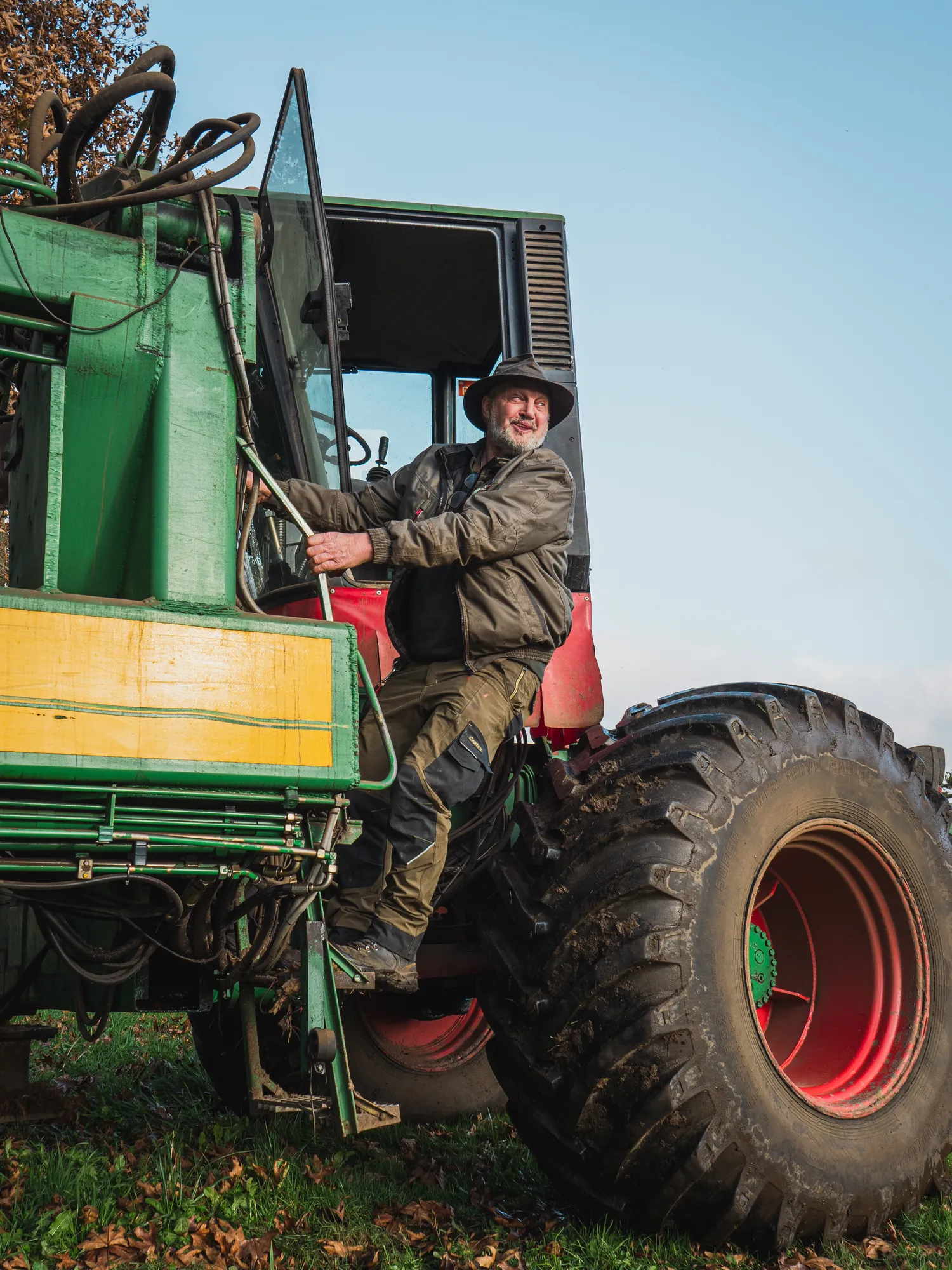
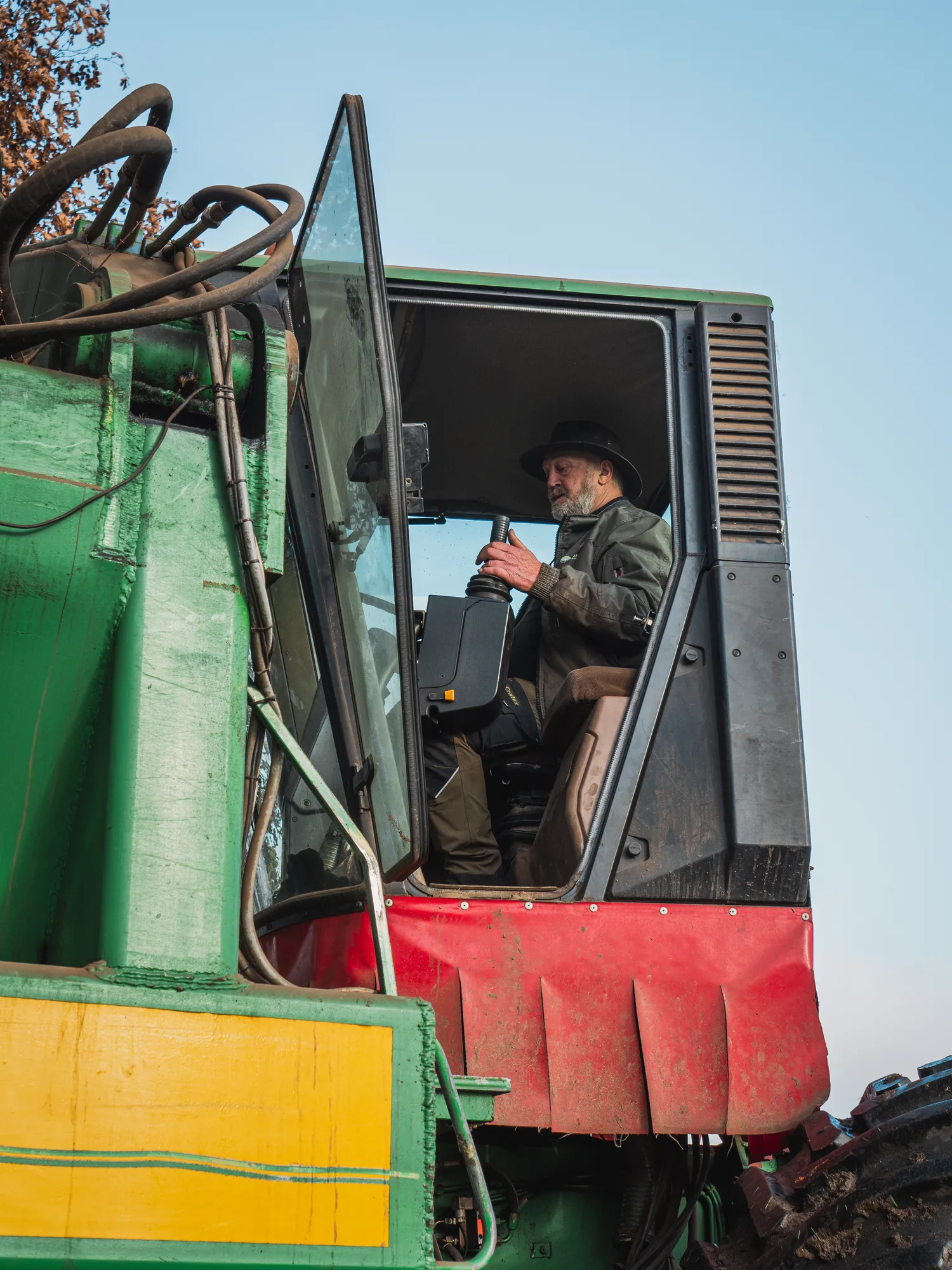
The RJT was built from parts sourced from all over. The 20-ton axles came from a mobile crane, the cab was found in Germany, and various structural parts were given a second life in the project. Together with specialists, calculations were made for the hydraulics, cylinders, and structure, while most of the welding and construction work was done right at the nursery itself.
Under the hood lies impressive engineering. Four separate hydraulic systems handle driving, steering, and operating the machine. The drive system alone runs at a pressure of 400 bar to get this enormous machine moving. Safety played a key role throughout. The RJT was ultimately awarded an official CE certification, backed by extensive technical calculations and structural documentation.